Best Suspension Upgrades for a 1967-1969 Camaro
Table of Contents
A Buyer’s Guide to Modern Handling for First-Gen Camaros
The 1967-1969 Camaro remains one of the most popular platforms in the performance aftermarket. With modern tires, horsepower, and driving expectations, many owners quickly discover the limits of the original suspension.
The good news is that modern suspension systems can completely transform how these cars drive. The key is choosing the upgrade that matches your build goals.
Some 1st Gen F-body owners want a comfortable street car that drives better than stock. Others are building show-level restomods with modern engineering. And some builders want the maximum performance possible from the platform.
This guide explains the suspension upgrades that best fit each type of build.
Why First-Gen Camaro Suspensions Need Upgrading
The original Camaro suspension was built for narrow bias ply tires and lower power levels. Once you introduce modern grip and horsepower, its shortcomings become noticeable.
Limited camber gain
As the car leans in a corner, the factory front suspension struggles to keep the tire flat on the pavement. The contact patch shrinks under load, which contributes to understeer and limits front-end grip.
Leaf spring rear suspension compromises
Leaf springs handle multiple jobs at once. They locate the axle, support the vehicle’s weight, and control torque from acceleration and braking. That multi-purpose design works for street cruising but can lead to inconsistent axle control and reduced traction during hard driving.
Chassis and subframe flex
The first-gen Camaro uses a front subframe attached to a unibody structure. Under performance driving loads, this structure can flex. When that happens, suspension geometry changes dynamically, reducing steering precision and consistency.
Modern suspension systems address these limitations by improving suspension geometry, strengthening the chassis structure, and introducing adjustability that allows the car to be tuned for both performance and comfort.
The Three Best Suspension Paths for a 1967-1969 Camaro
Instead of ranking suspension systems as good, better, and best, it’s more helpful to match the solution to the builder and how the car is intended to be used.
Most Camaro projects fall into three categories.
Best Suspension for Street Performance Builds
Comfortable handling upgrades with bolt-in installation
Many Camaro owners want a car that drives confidently on real roads without becoming harsh or difficult to build.
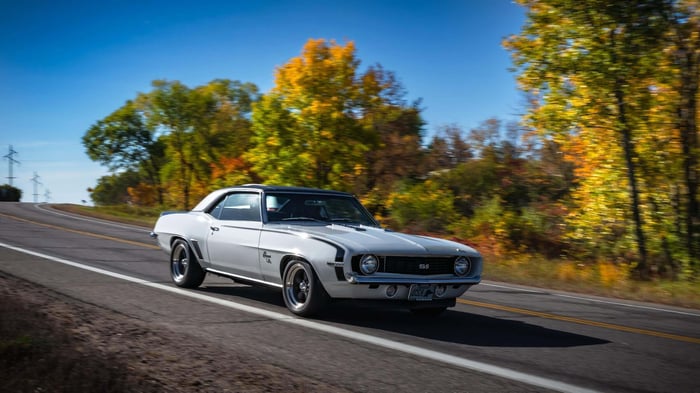 This type of build prioritizes:
- Comfortable ride quality
- Predictable installation
- Adjustable ride height
- Easy, do-it yourself at home upgrade
For this builder profile, a complete suspension system from QA1 is the best suspension upgrade you can make to your first gen Camaro.
QA1 suspension kits are designed as complete front-and-rear solutions rather than individual component upgrades. By replacing the factory suspension with modern coilovers, tubular control arms, and a four-link rear suspension, the system improves both geometry and drivability.
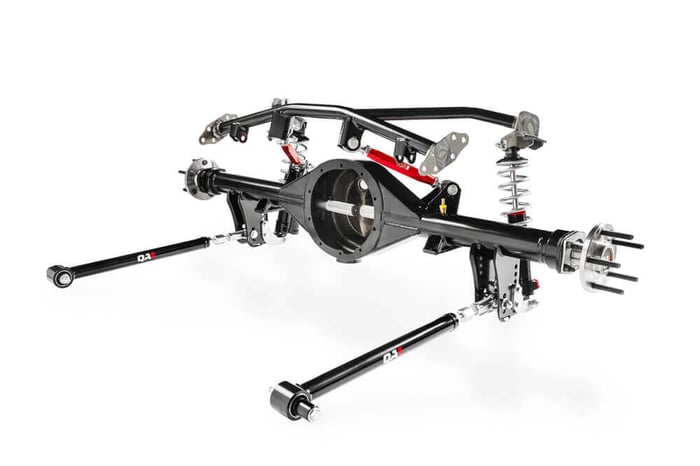
Benefits of this approach include:
- Adjustable ride height to dial in the perfect stance
- Adjustable shocks to fine-tune ride comfort and performance
- Increased rear wheel and tire clearance
- Easy bolt-in installation designed with DIY enthusiasts in mind
The result is a Camaro that feels noticeably more stable and responsive, while still remaining comfortable for long drives or events like Hot Rod Power Tour. For enthusiasts who want modern handling without major fabrication, this type of system delivers a strong balance of performance and installation simplicity.
Best Suspension for High-End Restomod Builds
Modern engineering with OEM-level refinement
Some 1967-1969 Camaro builds aim for something beyond bolt-ons. The objective is a next-level result where the car feels engineered from the ground up, with modern handling, high-end craftsmanship, and suspension systems that work seamlessly with the vehicle’s structure.

Common priorities for this type of build include:
- Show-level craftsmanship and finish
- Refined ride quality with modern handling performance
- Integrated suspension systems designed as complete engineering solutions
For this type of build, solutions from Detroit Speed are widely used in high-end Camaro restomods.
Hydroformed front subframe upgrade
One of the most well-known upgrades for a first-gen Camaro is the Detroit Speed hydroformed front subframe. Instead of modifying the factory front clip, this system replaces it entirely with a newly engineered structure designed around modern suspension geometry.
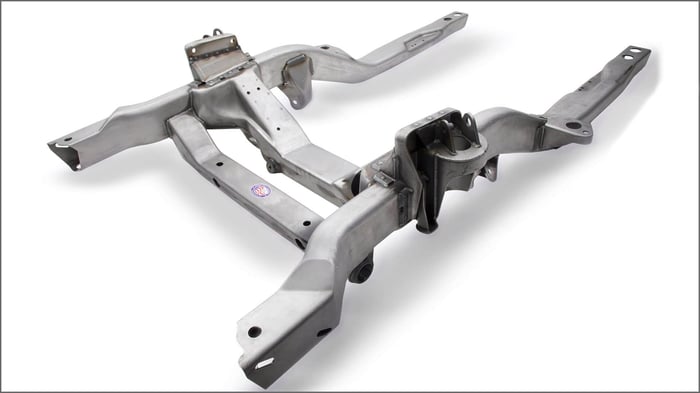
Hydroforming allows frame rails to be formed from a single piece of steel using high-pressure fluid. This manufacturing process creates rails that are stronger, more rigid, and more dimensionally consistent than traditional welded assemblies.
The result is a front suspension foundation that:
- Improves steering precision
- Strengthens the chassis to allow the suspension to perform as designed
- Maintains more consistent suspension alignment
- Integrates cleanly with the vehicle structure
If you want a deeper look at how hydroforming enhances chassis rigidity, Detroit Speed breaks it down in detail in this guide.
QuadraLink rear suspension system
On the rear of the car, Detroit Speed’s QuadraLink system replaces the factory leaf springs with a four-link suspension designed to improve axle control, traction, and cornering stability.
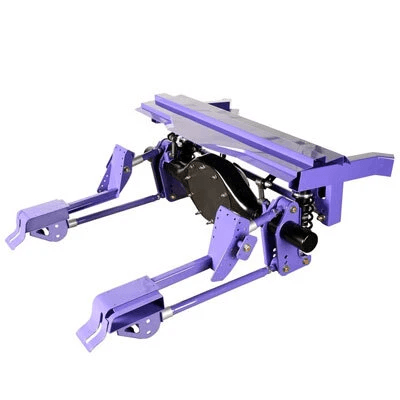
Unlike many racing-style rear suspension systems that rely on metal rod ends, QuadraLink uses specialized joints and high-durometer rubber bushings designed to allow articulation while minimizing noise and harshness. This makes it particularly well suited for high-end street-driven restomod builds.
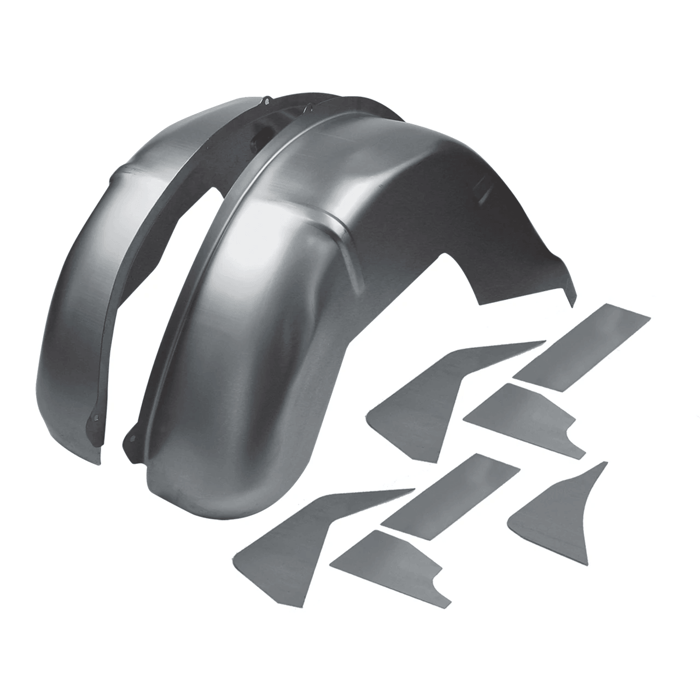
Installation requires fabrication and welding, but the result is a suspension system that delivers modern handling performance while retaining the refinement expected from a premium Camaro build. Pairing the QuadraLink with Detroit Speed mini-tubs opens the door for significantly wider rear tires, creating a setup that improves both traction and stance while maintaining the clean integration high-end restomod builds are known for. Best Suspension for Pro-Touring and Track Builds
Best suspension for performance and tire clearance
Some builders want their Camaro to deliver serious performance without losing the enjoyment of driving it on real roads. These projects aim for modern sports-car handling while still being comfortable enough for road trips, cruising, and weekend drives.
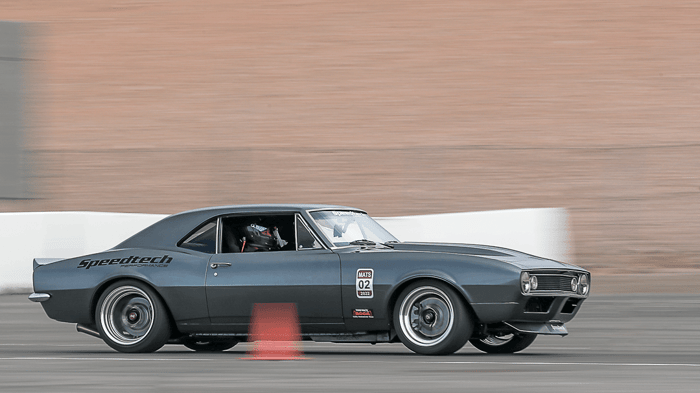
These builds focus on:
- Maximum tire width
- Track capability
- Advanced suspension geometry
- Increased chassis rigidity
- Modern steering response and driver feel
For this type of build, Speedtech Performance Extreme Chassis systems are designed to push the platform further.
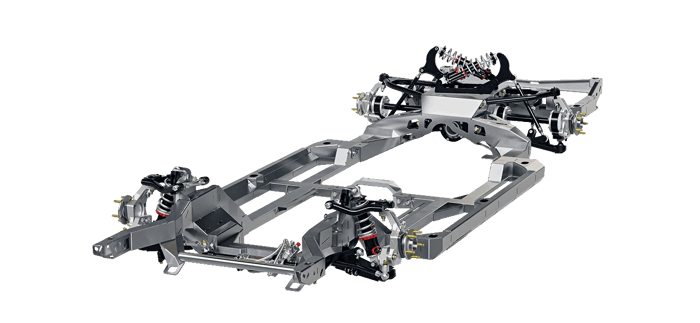
Rather than upgrading portions of the factory chassis, the Extreme Chassis replaces the foundation of the vehicle with a fully engineered performance chassis system designed around modern suspension geometry, wider tire fitment, and significantly increased structural rigidity.
The result is a Camaro that feels far more precise, planted, and confidence-inspiring under aggressive driving.
Speedtech Extreme Front Suspension
Modern geometry built for serious handling performance
At the front of the chassis, Speedtech’s Extreme front subframe is designed to maximize steering angle, front-end grip, and overall driver confidence.
The system uses modern suspension geometry engineered to improve camber control, steering response, and stability under hard cornering. Compared to the limitations of the factory subframe and suspension design, the Extreme front suspension provides a far more capable foundation for aggressive street driving, autocross, and track-focused builds.
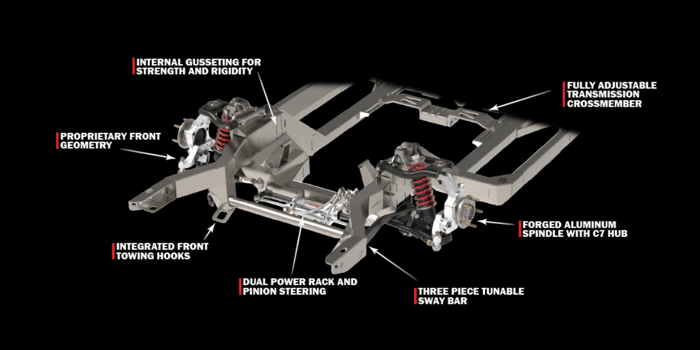 Speedtech Performance ExtReme Front SuspensionKey advantages include:
- Advanced front suspension geometry
- Improved steering precision and driver feedback
- Reduced chassis flex for more consistent suspension performance
- Extremely wide front wheel and tire capability with 30-degrees of steering
- Adjustable suspension settings for ride height and handling balance
With the right wheel and tire package, many Speedtech-equipped Camaros can support rear tire widths in the 315–335 range, with some combinations allowing even larger fitment depending on wheel offset, mini tubs, and ride height.
Speedtech Rear Suspension Options
Torque Arm or Independent Rear Suspension (IRS)
One of the advantages of the Speedtech Performance Extreme Chassis is the ability to tailor the rear suspension around the intended use of the build.
While the front suspension geometry and chassis structure create the foundation for steering response and handling precision, the rear suspension plays a major role in how the car puts power to the ground, responds in transitions, and feels on real roads.
Speedtech offers both torque arm rear suspension and Independent Rear Suspension (IRS) configurations for first-gen Camaro builds, allowing builders to prioritize traction, refinement, track capability, or long-distance drivability depending on the direction of the project.
Torque Arm Rear Suspension
Proven traction with modern street performance
The torque arm rear suspension remains one of the most popular choices for aggressive street cars and pro-touring Camaros.
Unlike factory leaf springs that must simultaneously support vehicle weight, locate the axle, and manage drivetrain forces, a torque arm system separates those responsibilities into dedicated suspension components. This allows the rear suspension to control acceleration, braking, and cornering forces more consistently.
The result is a Camaro that feels significantly more planted and predictable under power.
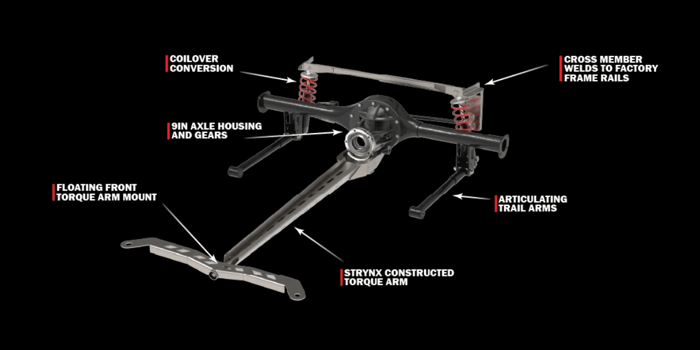
Benefits of a torque arm suspension include:
- Improved rear traction during acceleration
- Reduced wheel hop compared to factory leaf springs
- More consistent handling during cornering and braking
- Excellent durability for high-horsepower street and pro-touring builds
- Comfortable ride quality for real-world street driving
Torque arm systems continue to be a favorite in the pro-touring world because they balance handling performance, drivability, packaging, and durability while maintaining the strength and simplicity of a solid rear axle.
For builders looking to maximize rear wheel and tire fitment, Detroit Speed mini-tubs are a popular addition to torque arm-equipped Camaros. Mini-tubs create additional inner wheelhouse clearance, allowing significantly wider rear tire packages that improve traction, stance, and overall pro-touring capability.
Independent Rear Suspension (IRS)
Modern refinement with sports car handling characteristics
For builders looking to push a first-gen Camaro even further, Speedtech also offers Independent Rear Suspension (IRS) configurations.
Unlike a solid rear axle where both wheels are connected together, IRS allows each rear wheel to react independently to road conditions and suspension movement. This improves tire contact during cornering and helps the car remain more composed over uneven pavement.
The result is a driving experience that feels more refined, more stable at speed, and more comparable to a modern high-performance sports car.
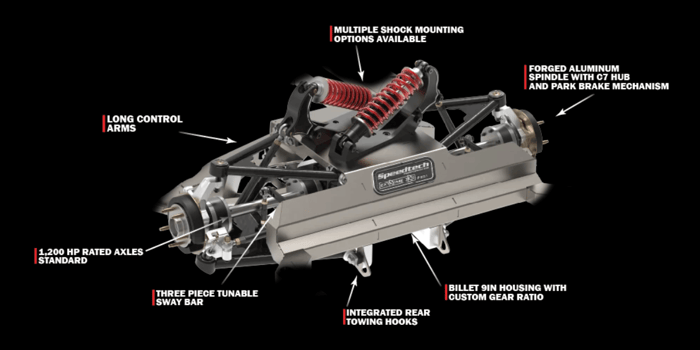
Advantages of IRS include:
- Improved ride quality over rough roads
- Better rear suspension compliance during cornering
- Enhanced stability and control at higher speeds
- Modern sports-car driving feel and refinement
- Reduced unsprung weight compared to many solid axle combinations
IRS systems are commonly selected for advanced pro-touring and high-end restomod builds where builders want maximum handling refinement without sacrificing performance capability.
These systems require more fabrication and structural integration than bolt-on upgrades, but they deliver the highest overall performance potential.
For builders focused on autocross, track days, or aggressive pro-touring driving, this approach unlocks performance the factory chassis simply cannot achieve.
In Summary: Choosing the Right Camaro Suspension
Before selecting suspension upgrades, ask a few key questions:
How will you drive the car?
Street cruising, road trips, and track driving all demand different suspension setups.
How much fabrication are you willing to do?
Bolt-in upgrades require far less work than full chassis conversions.
How much performance do you want to unlock?
Some builds benefit from incremental upgrades, while others justify complete chassis systems.
Matching the suspension strategy to the goals of the build ensures the final result delivers the driving experience you’re aiming for.
When done right, a first-gen Camaro can handle, ride, and perform at a level that rivals many modern performance cars.
FAQs
What is the best suspension upgrade for a 1967-1969 Camaro?
It depends on how the car will be used. Street-focused builds often use bolt-in systems like those from QA1. High-end restomods commonly use engineered systems from Detroit Speed Engineering. Maximum performance builds often move to complete chassis solutions from Speedtech Performance.
Why do first-gen Camaros need suspension upgrades?
The factory suspension was designed for narrow tires and modest power. Modern upgrades from companies like QA1, Detroit Speed Engineering, and Speedtech Performance improve camber control, axle stability, and chassis rigidity so the car can handle modern performance.
What is the best upgrade from leaf springs on a first-gen Camaro?
Replacing the factory leaf springs with a modern link suspension is one of the most effective ways to improve handling and traction in a 1967-1969 Camaro. Four-link systems separate axle location from torque control, which helps the rear suspension manage acceleration, braking, and cornering forces more consistently.
What suspension upgrade improves steering feel the most?
Many steering issues in classic Camaros come from worn linkage rather than the suspension itself. Replacing key components such as tie rods, idler arms, and pitman arms with matched parts from Proforged can significantly tighten steering feel and complement modern suspension upgrades.
What size tire can fit under a 1967-1969 Camaro?
A stock first-gen Camaro typically fits rear tires in the 255–275 range depending on wheel offset and ride height. Builders looking for more traction often install mini-tubs, which widen the rear wheel wells and allow significantly larger tires. With mini-tubs and the right suspension setup, many builds can fit tires in the 315–335 range or even larger depending on the chassis and wheel package.
Detroit Speed Mini-tubs are commonly paired with modern suspension systems from QA1, Detroit Speed Engineering or chassis solutions from Speedtech Performance, which are designed to support wider rear tire packages.