Drag Racing Suspension: How to Tune Your Front End for Better Launches
Table of Contents
Your drag racing car’s front suspension is one of the most important systems to tune if you want to improve launch consistency, 60-foot times, and overall stability down the strip. A properly set up suspension doesn’t just help weight transfer—it keeps the front end under control so you can put more power to the ground.
Front Sway Bar: What it Does and When to Remove It
A front sway bar is critical for handling and cornering on the street or autocross track. But in drag racing, it can actually limit performance.
Removing the sway bar allows the front end to move more freely.
This improves weight transfer to the rear tires, giving you more traction off the line.
It also reduces front-end weight, which can make a difference in ETs.
Front Springs: Why Softer is Better
Springs control how your drag car reacts during launch. Choosing the right spring rate makes a huge impact on performance.
Softer springs store more energy, which helps lift the nose and move weight rearward.
For drag racing, your springs should generally compress 30–35% at ride height.
A properly set spring rate improves both traction and ride consistency.
Front Shocks: Tuning is Key
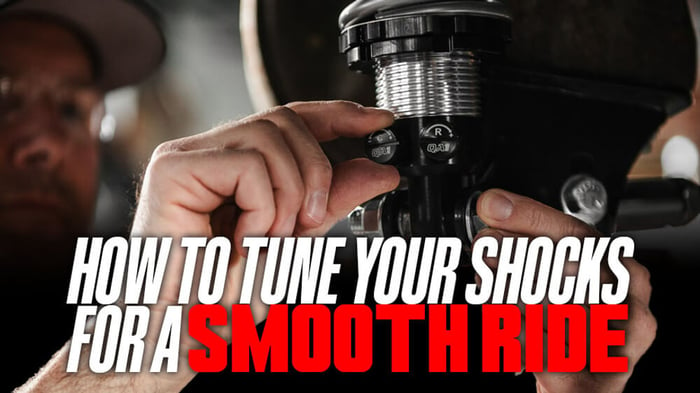
Front shocks are where fine-tuning pays off. Adjustable drag shocks give you precise control over how weight transfers and how the front end behaves at launch.
Rebound adjustment: Controls upward movement. Firming it up helps limit wheelies.
Compression adjustment: Slows the nose from slamming down after launch.
Double-adjustable shocks: Provide the most flexibility to fine-tune both sides of the hit.
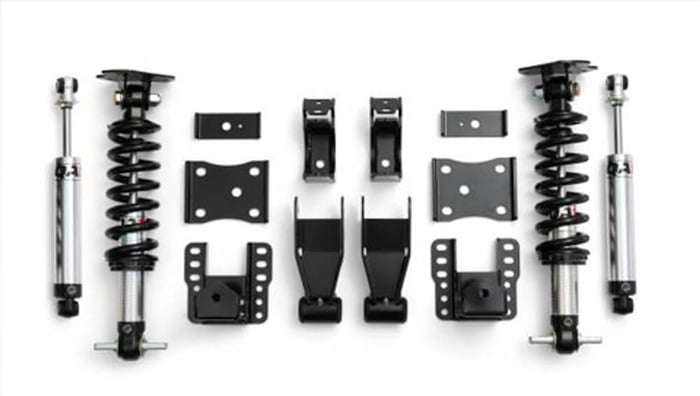
SHOP QA1 DRAG RACE & STREET SHOCKS
Front End Travel: Controlling Movement
How far your front end travels plays a big role in launch consistency and down-track stability.
Too much travel can cause excessive wheelies and unstable weight transfer.
Droop stops or limiting straps can help keep the car balanced.
Controlled travel ensures smoother launches and more predictable ETs.
Experimentation is Key
Every car, driver, and track condition is different. The only way to find your best setup is through testing and detailed note-taking.
Record your suspension changes and ET results.
Make small, incremental adjustments.
Use tools like QA1’s Tech Center and YouTube channel for additional tuning tips.
FAQs
Why should I remove the front sway bar in drag racing?
Because it restricts front-end movement, limiting weight transfer. Removing it improves traction by shifting weight to the rear tires faster.
What’s the ideal spring rate for drag racing?
Softer front springs (compressed about 30–35% at ride height) allow better energy storage and faster weight transfer to the rear.
Do I really need adjustable shocks for drag racing?
Yes — adjustable shocks let you control compression and rebound to manage launch, prevent wheelies, and stabilize your car as it comes back down. For the best results, we recommend our 4-Way Adjustable MOD Series Shocks.
How much front end travel is too much?
Enough to allow proper weight transfer, but not so much that the car becomes unstable. Limit straps or droop stops help manage this balance.
How should I tow my racecar without causing premature shock wear?
When towing your racecar, the suspension doesn’t get a break—it’s working the entire trip to and from the track. Every bump, pothole, or stretch of uneven pavement your tow vehicle encounters is also felt by your racecar, even while it’s on the trailer. Over long hauls, this constant movement puts unnecessary stress on the shocks, leading to faster wear.
If you’ve ever checked your shocks after a tow, you may have noticed they’re warm—that’s proof they’ve been working the whole ride. To help prevent premature shock and suspension wear, it’s important to secure your car in a way that limits bouncing.
Many racers tie down by looping straps around the axle housing or front suspension. The problem? This method doesn’t hold the suspension still. Instead, always strap the chassis or body directly to the trailer. This allows the body to move with the trailer, rather than independently, reducing stress and protecting your suspension components.
How can I reduce wheel hop, or eliminate it completely?
Wheel hop is the uncontrolled bouncing of the rear tires against the road or track surface. Not only is it frustrating, but it also robs your car of traction, stability, and overall performance. Fortunately, there are proven ways to reduce or eliminate wheel hop.
A good starting point is replacing worn suspension components such as trailing arm bushings, sway bar bushings, and shocks. Upgrading to tubular trailing arms further minimizes deflection compared to factory stamped steel arms, helping keep the tires planted.
You can also control wheel hop by installing a rear sway bar or increasing the stiffness of your current one, which reduces unwanted axle movement. For cars with factory four-link setups—like GM A- and G-body vehicles—QA1’s Anti-Hop Bars are specifically engineered to correct suspension geometry and eliminate wheel hop.
Making these upgrades will help you gain better traction, improve suspension control, and unlock more consistent performance at the track or on the street.