GM Muscle Car Suspension Upgrades: A Step-by-Step Guide for Chevelle, Camaro, Nova & More
Table of Contents
- Starting Your GM Muscle Car Suspension Upgrade Journey
- Step 1: The Initial Suspension Inspection
- Step 2: Upgrade Shocks and Springs
- Step 3: Install Larger Aftermarket Sway Bars
- Step 4: Upgrade to Tubular Control Arms
- Step 5: Replace Trailing Arms (Rear Suspension)
- Step 6: Reinforce with Tubular Frame Supports
- The Ultimate Upgrade: Ditching Leaf Springs for a Tubular 4-Link Rear Suspension
- Ready to Upgrade Your GM Muscle Car?
- FAQs
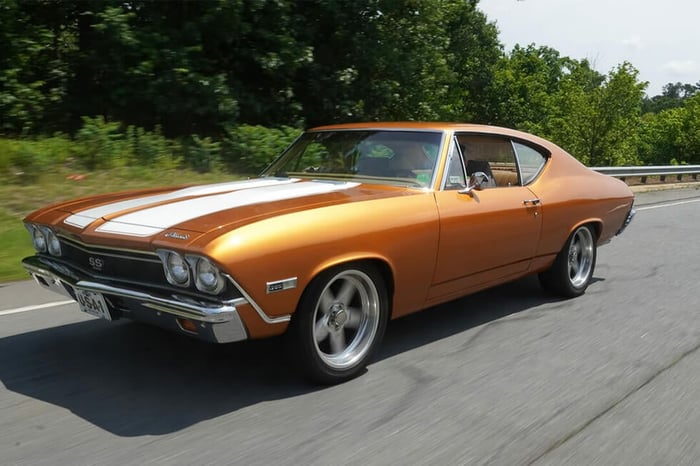
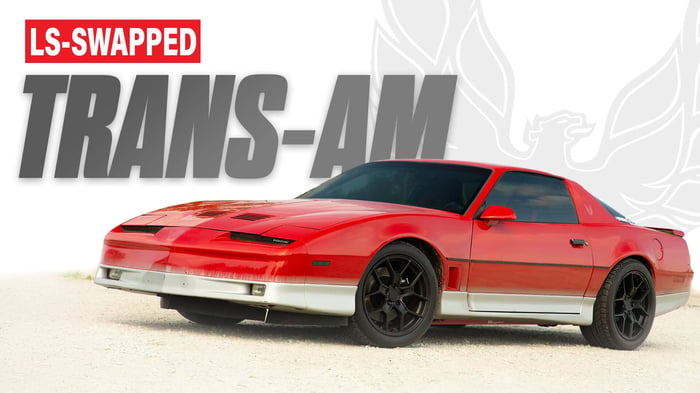
GM produced some of the most iconic muscle cars ever – from the Chevelle and Camaro to the Nova and Impala, plus their Pontiac, Buick, and Oldsmobile cousins. While these cars boast timeless body styles and powerful engine packages, most enthusiasts agree their factory suspension is subpar by today’s standards. Learn how to transform your GM classic's handling and ride with QA1 performance upgrades.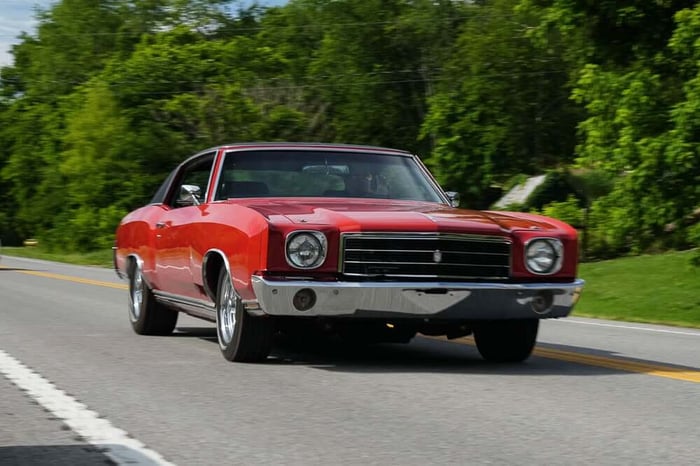
Starting Your GM Muscle Car Suspension Upgrade Journey
With so many aftermarket muscle car suspension options available, "Where do I start?" is a common question. Luckily, QA1 offers several configurations tailored to your performance goals. While our full-vehicle suspension systems are popular for a complete overhaul, many prefer to build their vehicle piece-by-piece.
You can use the parts list of a full suspension system as a roadmap for individual upgrades. This approach is excellent from a budget standpoint (buying parts individually costs the same as buying the full kit over time) while minimizing the time your vehicle is off the road for upgrades.
We’ve been in the performance suspension business for a long time, and we've figured out the most effective upgrade order to maximize your "bang for the buck." Follow along as we walk you through which parts you should focus on first, and what can wait.
Step 1: The Initial Suspension Inspection
Before any upgrades, conduct a thorough inspection. If your GM muscle car's suspension is all original, you’ll definitely want to replace anything that is worn out, broken, or unsafe. Get the car safely up in the air and meticulously check over every component.
While inspecting, physically grab components and check for excessive movement or play where there shouldn't be any. Look for "witness marks" – places where parts have been rubbing that shouldn't. Factory suspension components are often stamped steel, and after years of use and abuse, these can tweak, fatigue, or even crack. For example, GM A-Bodies – such as Chevelles, Skylarks, Cutlasses, and GTOs – are notorious for having control arms that crack by the lower ball joints. Additionally, the original rubber bushings in old control arms are very likely cracked and no longer capable of holding things straight and true.
Step 2: Upgrade Shocks and Springs
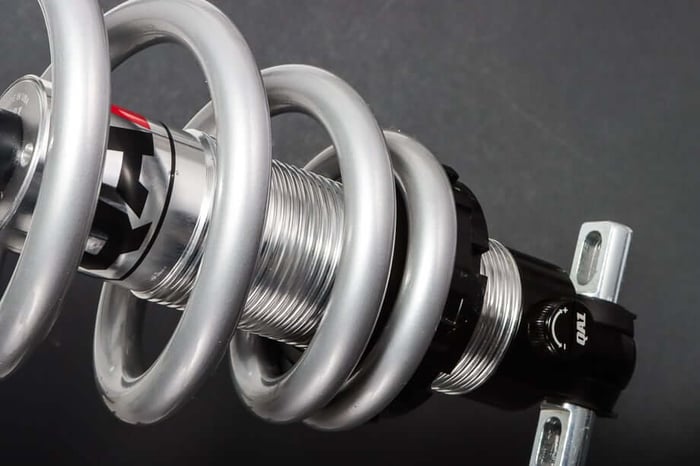
When it's time to upgrade, starting with your shocks and springs offers the biggest difference in ride quality and overall handling. It’s easy to overlook, but these components are fundamental for handling around corners, effective braking, and even comfortable cruising. QA1 offers a variety of options:
- Stock Replacements: For improved performance over worn factory units without significant modification.
- Coil-Over Systems: A significant upgrade that provides adjustable ride height and advanced damping control. We offer both front coilover kits and rear coilover kits.
Our line of performance shocks come in non-adjustable, single adjustable, or double adjustable configurations to maximize ride quality and help you achieve your specific goals. We also provide many different spring rates to complement these shocks, allowing you to fine-tune your setup whether you’re aiming for drag racing, carving curvy backroads, or simply cruising to the burger joint.
Not sure how to measure spring rate? We've got you covered with our complete Spring Rate Measurement Guide.
Step 3: Install Larger Aftermarket Sway Bars
Next on your upgrade path, you’ll want to install larger aftermarket sway bars (also known as anti-roll bars). From the factory, most GM muscle cars were built to cruise or go in a straight line; they weren’t truly designed to carve corners aggressively. Our larger diameter sway bars dramatically reduce body roll, helping to keep your car flat and stable during hard cornering.
Crucially, most classic GM muscle cars either had small, inadequate rear sway bars or none at all. Adding QA1 sway bars to the rear of your chassis will drastically improve handling characteristics. All our sway bars come with upgraded polyurethane bushings, which eliminate unwanted flex, allowing the sway bar to work as efficiently as possible.
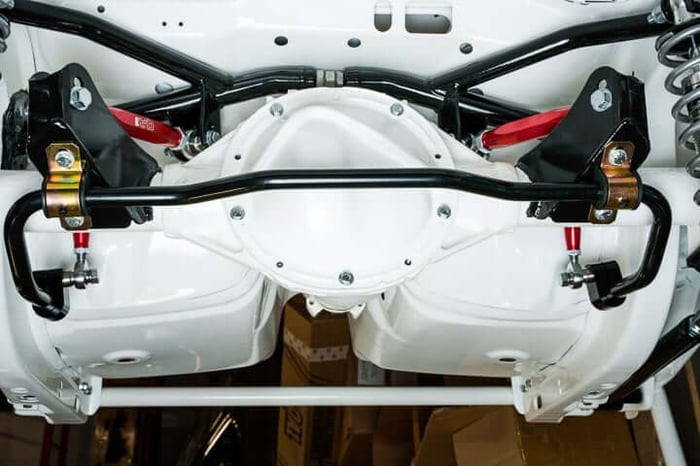
Step 4: Upgrade to Tubular Control Arms
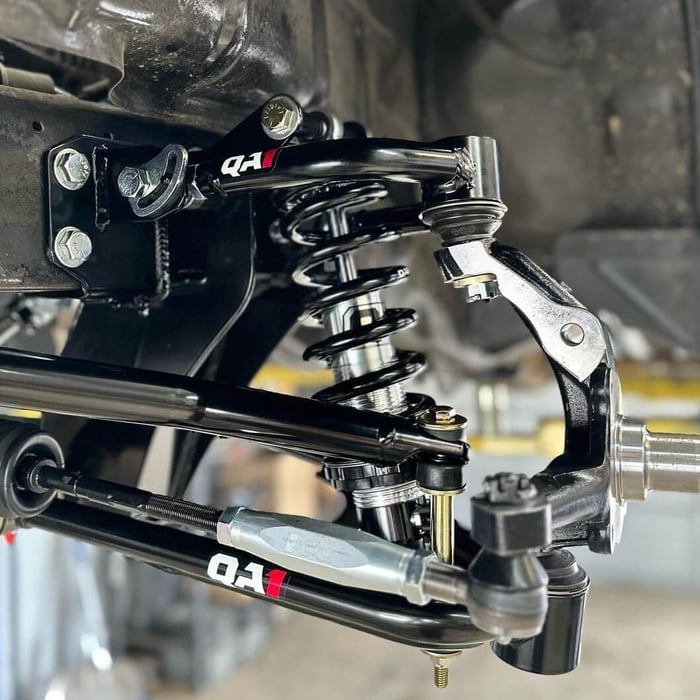
With your shocks, springs, and sway bars upgraded, the next logical step to further improve handling is to install a set of QA1 tubular control arms. These aren't just stronger than stock; they also offer vastly improved geometry.
- Superior Bushings: Factory control arms typically used soft rubber bushings, providing a comfy ride but little in the way of performance. QA1 control arms are upgraded with either durable polyurethane bushings or low-deflection UHMW bushings. These firmer bushings allow proper suspension articulation for precise control, yet still offer enough compliance for comfortable street driving.
- Enhanced Strength: As mentioned, stock GM stamped steel arms are prone to cracking, especially around the lower ball joint. QA1 arms utilize high-quality HSLA (High-Strength Low-Alloy) tubing, ensuring the ball joints are securely held and the arm is significantly stronger than the factory unit.
- Modern Geometry: Our control arms incorporate modern geometry characteristics. While bias-ply tires from the '60s preferred negative caster, today's radial tires thrive with positive caster. We've also corrected camber curves to help keep your tires planted during cornering. This all translates to a vehicle that drives more predictably and precisely, both on the road and around the track.
Step 5: Replace Trailing Arms (Rear Suspension)
The next logical step for your rear suspension is to replace the trailing arms. QA1 trailing arms offer many of the same benefits as our front control arms: added strength, reduced weight, and improved aesthetics. They allow the rear suspension to articulate and go through its full range of motion more easily, keeping the tires planted during hard launches and aggressive cornering. This is crucial, as the previous upgrades will definitely inspire more spirited driving.
Step 6: Reinforce with Tubular Frame Supports
Finally, it's time to look at the foundation all these new performance parts bolt to: the frame. After rigorous testing, QA1 has identified common weak points in GM muscle car frames and developed effective solutions. Some original GM design choices can lead to chassis flex or even breakage, especially when you start adding horsepower, bigger tires, and driving aggressively. Give your frame the attention it needs to truly get the most out of your suspension upgrades.
The Ultimate Upgrade: Ditching Leaf Springs for a Tubular 4-Link Rear Suspension
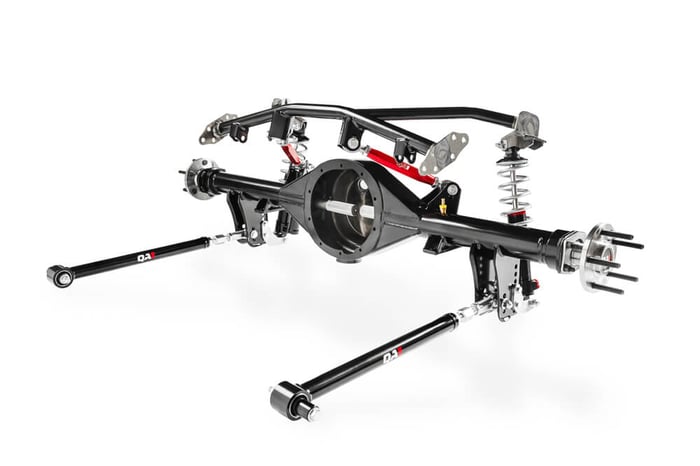
One of the most significant transformations you can give your GM muscle car to elevate its ride quality, handling, and adjustability is swapping out the factory leaf spring rear suspension for a coilover and tubular 4-link system. This upgrade provides:
- Full Adjustability: Gain precise control over ride height and fine-tune your suspension with QA1 adjustable shocks.
- Modern Suspension Geometry: Experience a noticeable boost in chassis stiffness and stability immediately.
- Improved Power Transfer: Unlike problematic leaf springs, a tubular 4-link system delivers better power transfer, virtually eliminates wheel hop, and provides precise axle control during acceleration and cornering. The triangulated 4-link design ensures your rear suspension stays properly located side-to-side.
- Increased Clearance: A tubular 4-link often provides more clearance for wider wheels and tires, improving traction and allowing for a more aggressive aesthetic.
For owners of 1967-81 Camaros and Firebirds, as well as 1968-72 Chevrolet Nova and Pontiac Ventura, take your 4-link upgrade a step further with a durable and versatile Ford 9-inch rear end housing. This complete bolt-in solution, with 31-spline axles and rugged construction, significantly increases your performance window to 650 horsepower.
Ready to Upgrade Your GM Muscle Car?
There are many ways to build a project vehicle. Whether you want to do it all at once with a full-vehicle suspension kit, or one piece at a time, QA1 has an option that’s right for you.
BROWSE QA1'S GM SUSPENSION UPGRADES BY VEHICLE
For any questions about your GM muscle car suspension upgrade, please give us a call at (952) 985-5675 or shoot us an email. Our experts are ready to help!
FAQs
Where should I start with upgrading my muscle car’s suspension?
Start by inspecting your current suspension for wear or damage. From there, the most noticeable improvements come from upgrading your shocks and springs, followed by sway bars, control arms, and rear suspension components. If you’re on a budget, QA1’s full suspension kits can also be used as a step-by-step upgrade roadmap.
Can I buy individual suspension components over time instead of a full kit?
Yes! QA1’s systems are modular, so you can build your suspension setup piece-by-piece. The total cost is comparable to buying a full kit upfront, and this method reduces downtime by allowing you to install components when it’s convenient.
What’s the biggest improvement I’ll notice first?
Upgrading your shocks and springs will make the most immediate difference in ride quality, cornering, and braking. Swapping to QA1 coilovers gives you adjustable ride height and damping control tailored to your goals. Check out QA1's front and rear coilover solutions.
Why should I upgrade my sway bars?
Factory sway bars are often small—or missing entirely on the rear. QA1’s larger sway bars reduce body roll and improve stability and cornering, giving you a much more planted feel on twisty roads.
What makes QA1 tubular control arms better than stock?
Our control arms are stronger, lighter, and feature performance bushings that reduce flex. They also improve suspension geometry, especially camber and caster curves, for more predictable and responsive handling.
What’s the benefit of replacing the trailing arms in the rear?
Upgraded trailing arms provide improved articulation and keep the rear axle more stable under hard acceleration and cornering, helping your rear tires stay planted.
Do I really need frame supports?
Yes, especially if you’ve added power or plan on aggressive driving. Frame supports reduce chassis flex, help maintain suspension alignment, and protect your investment in performance parts.
How does a 4-link rear suspension compare to leaf springs?
A QA1 4-link system offers greater adjustability, traction, and ride comfort. It improves power transfer and virtually eliminates wheel hop, making it one of the best upgrades for serious performance and drivability gains.
I’m not sure what spring rate or shock valving I need. Can you help?
Absolutely. QA1 has a full Spring Rate Measurement Guide, and our suspension techs are happy to walk you through setup recommendations based on your vehicle and driving goals.
Do these upgrades work for both street and track use?
Yes! QA1 products are designed with dual-purpose performance in mind. Whether you're daily driving, autocrossing, or hitting the drag strip, our systems are built to adapt to your goals with adjustable damping, geometry, and ride height.
What GM platforms does QA1 support?
We support a wide range of GM vehicles including Chevelle, Camaro, Nova, Impala, Monte Carlo, GTO, Cutlass, Skylark, Firebird, Ventura, and more. Shop by vehicle to find compatible upgrades.