Rod Ends – Why load rating is only part of the specification story.
Table of Contents
Factors to consider when choosing rod ends
With so many rod end options—from materials and coatings to sizes and styles—it’s no surprise that selecting the right one for your project can feel overwhelming. And while many engineers focus on load ratings, there's more to performance than just strength on paper.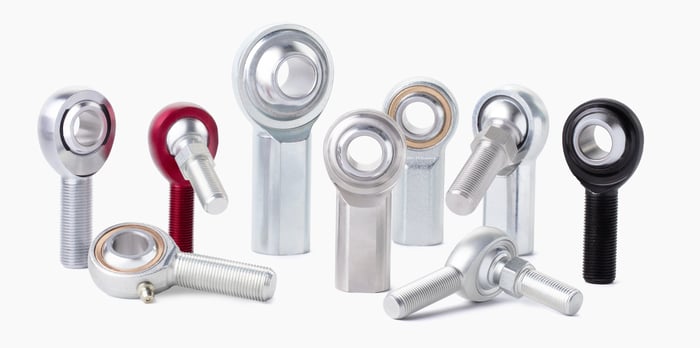
In this guide, we’ll break down the key factors that impact rod end longevity, performance, and real-world success—so you can avoid premature wear, costly downtime, and design headaches.
Why Load Rating Isn’t Everything
Sure, load ratings matter. But have you ever specified rod ends with plenty of strength—only to have them wear out faster than expected? You’re not alone. At QA1, we’ve helped thousands of customers overcome exactly that challenge by taking a more holistic approach to rod end selection.
Let’s dive into the factors that matter just as much—if not more—than raw strength.
Wear: The Hidden Rod End Destroyer
Rod ends might look strong, but that doesn't mean they'll last under real-world conditions. If you’re seeing excessive wear despite meeting load specs, you’re likely overlooking other critical design elements.
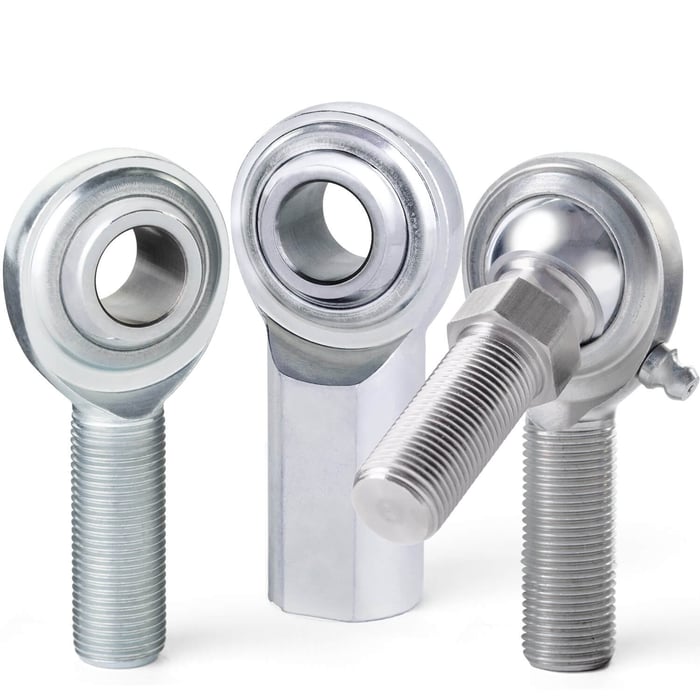 C-Series (2-piece) Rod Ends
For example, many systems use 2-piece rod ends, which feature a unique “Mohawk” body design that allows for great articulation and high load ratings. But depending on the application, they can wear faster than expected.
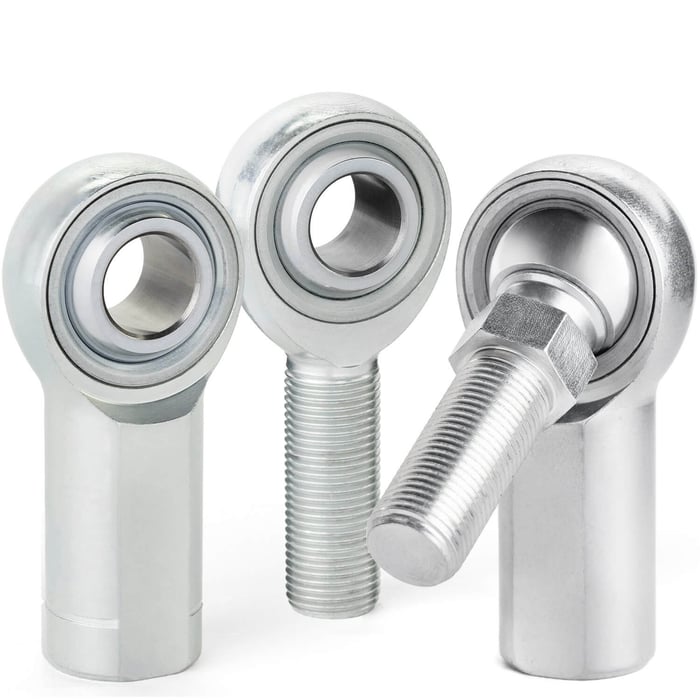 H-Series (3-piece) Rod Ends
That’s where 3-piece rod ends shine. Their ball-to-race conformity distributes load over a greater surface area, reducing friction and increasing service life. While they may sacrifice a bit of misalignment angle due to their slightly wider body, they can deliver significantly better durability—especially in high-cycle environments.
Searching for longer life rod ends? Try a QA1 3-piece design.
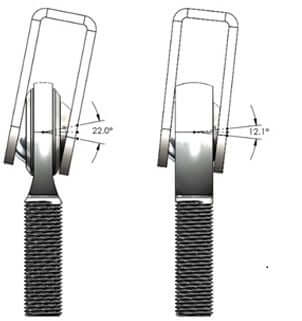 Compare: C-Series (left) vs. X-Series (right)
Misalignment: Know Your Angles
Not all rod ends flex the same way. Misalignment angle—the amount of articulation a rod end can handle before binding—is a crucial factor to get right.
Every QA1 rod end series specifies its misalignment range. Exceed it, and you risk accelerated wear or outright failure. Don’t know how much angle your design requires? We can help you calculate it.
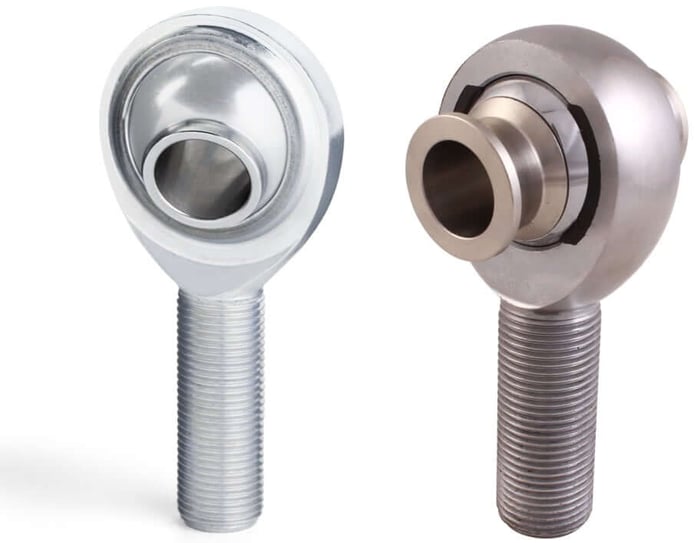 High-Misalignment PCY (left) and X-Series with High Misalignment Spacers (right)
Whether your needs are moderate or extreme, QA1 offers:
High-misalignment rod ends
High-misalignment spacers
And plenty of options to match your application's geometry
🔧 Pro tip: If your rod ends are binding at the housing or ball, misalignment is often the culprit.
Material Matters: Strength, Weight & Environment
Choosing the right rod end material can make or break your design—especially in harsh or high-performance environments.
Stainless steel and zinc-plated carbon steel are great for corrosive or outdoor conditions.
Aluminum rod ends are ideal for weight-sensitive applications like racing, where every ounce matters.
Carbon steel provides an economical choice for moderate-duty applications.
Alloy steel delivers maximum strength where it counts most.
At QA1, we offer a wide selection of materials across our product lines—so you don’t have to compromise between strength, weight, or environmental resistance.
Load Rating: Still Important—But Just One Variable
Once you’ve factored in wear, misalignment, and material, then it’s time to zero in on load rating. With QA1’s broad mix of materials and designs, you can dial in exactly the combination you need.
Need a high-load option? Choose from our ultra-strong alloy steel rod ends. Looking for a budget-friendly alternative with adequate strength? Our carbon steel options have you covered.
No matter the combination, you can count on QA1 to help you meet your load, articulation, and environmental requirements without over-spec’ing or overspending.
Let QA1 Help You Get It Right
Rod end selection isn’t one-size-fits-all—and we’re here to help you make the right call. With nearly 30 years of experience, QA1 has the broadest selection of rod ends in the industry, backed by in-house engineering, manufacturing, and support teams.
Whether you're sourcing off-the-shelf parts or looking for a custom rod end solution, we’re ready to assist.
Why QA1?
Widest in-stock selection in the industry
Fast, knowledgeable application support
Custom design and private-label options
Don’t let rod ends be the weak point in your design. Talk to QA1 and spec with confidence.
Interested in Learning More?
Take a deep dive into rod ends & spherical bearings with our TRAINING VIDEO designed to help industrial distributors and OEMs spec these important components with confidence!