Restomods Built This Sleek QA1-Equipped 1970 Dodge Charger
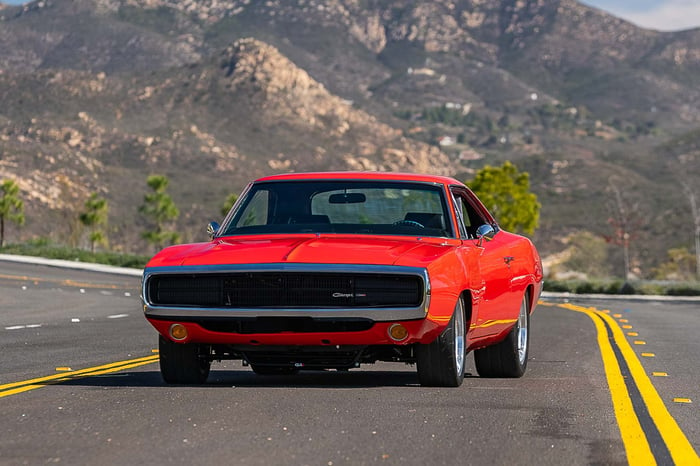
The 1970 Dodge Charger is one of the most recognizable muscle cars ever built, and when Restomods set out to build one for a giveaway, the goal was straightforward: make it fast, clean, and driveable without cutting corners.
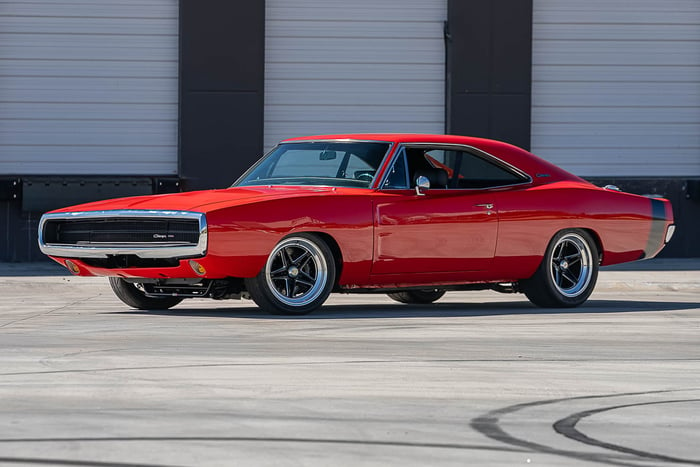
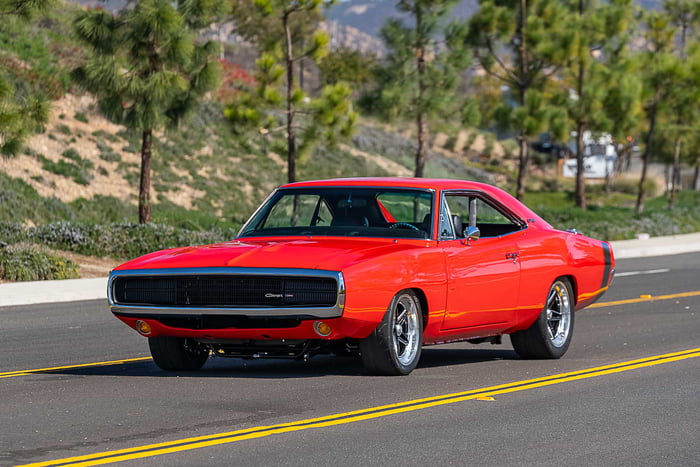
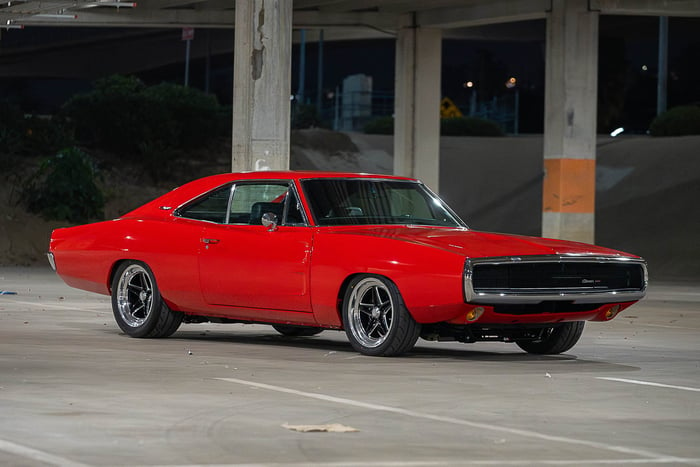
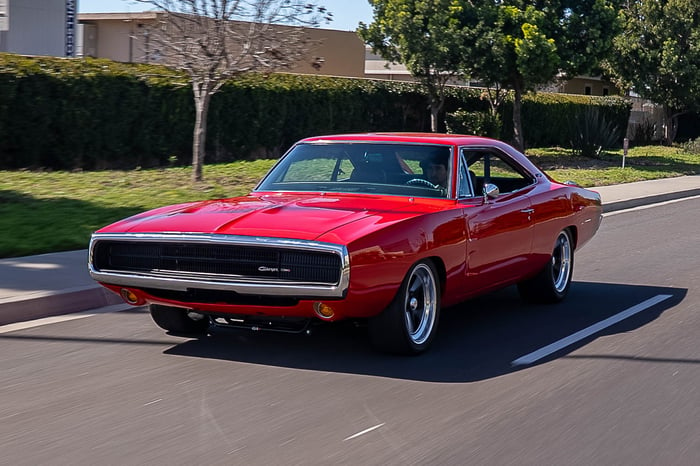
The car is a fully modernized machine with serious hardware underneath. Finished in Viper Red and sitting low on American Racing wheels, the Charger has a striking stance and look that’s hard to ignore. But the real story is in the technical details, where every component was selected to bring the car up to today’s standards in performance, reliability, and handling.
650HP Gen-3 Hemi with Smart, Clean Execution
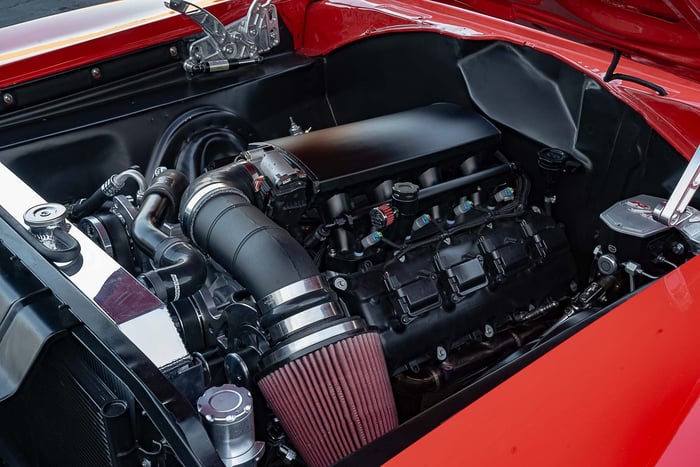
Power comes from a 426 cubic inch Gen-3 Hemi crate engine from Blueprint Engines, putting out 650 horsepower. It’s a stout combination built to run hard, fed by a Holley Terminator X-Max EFI system and exhaling through a stainless exhaust with an X-pipe. Stainless shorty headers handle the transition from cylinder heads to pipework, and an aluminum radiator with twin brushless electric fans keeps the heat in check. Up front, an aftermarket front accessory drive keeps everything compact and clean. Under load, it stays cool, runs strong, and has a quick, snappy throttle response that makes it feel lighter than its size suggests.
The engine bay itself departs from traditional Mopar presentation. Rather than going with a body-colored bay, the team opted for a matte black finish. On red cars, Mopar’s usual body color engine compartments can be overpowering, and here the blacked-out treatment simplifies the visuals and puts the focus on the engine itself. Wiring and plumbing are tightly managed, with clean routing and minimal clutter, and the result is a compartment that looks sharp and serviceable, with OE-style rather than show car flash.
Backed up to the Hemi is a Tremec TKX five-speed transmission that's paired with a McLeod clutch, McLeod hydraulic throw-out bearing, and a Silver Sport Transmission clutch pedal conversion. The combination gives modern drivability with a classic engagement feel. A Hurst pistol grip shifter connects the driver to the gearbox and fits the Charger’s character without needing to reinvent anything. Fuel is handled by a 340LPH in-tank pump—plenty of flow to support the EFI and power level. It’s a complete setup, with no weak links and no questionable shortcuts.
Brakes and Tires Built for Real Performance
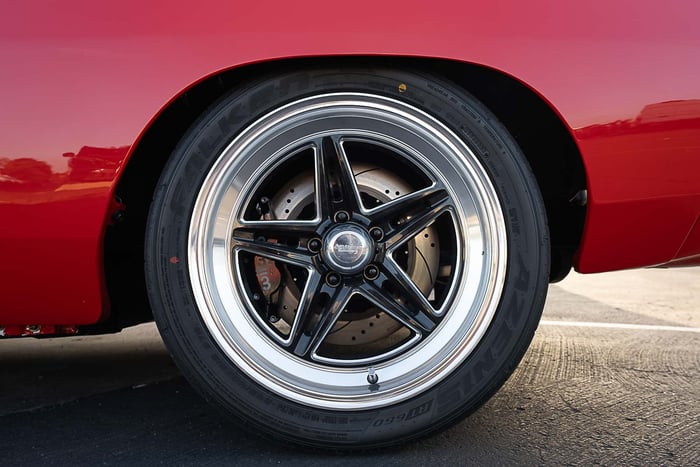
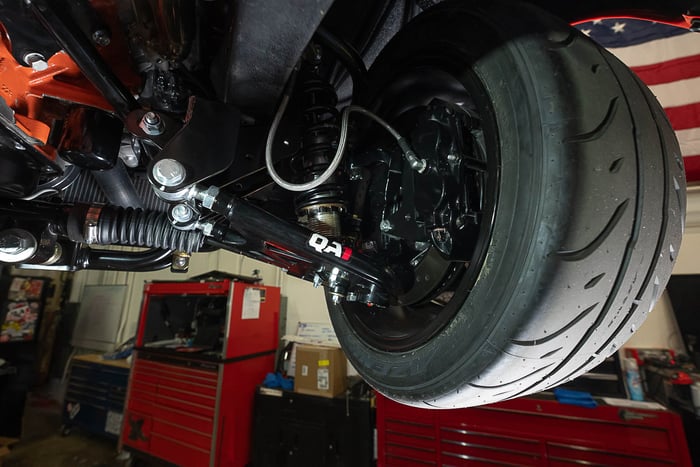
Falken RT660 tires in 245/40R18 up front and 295/40R18 in the rear provide serious grip that far outpaces what was available in the car’s original era. Brakes are handled by Wilwood throughout; the front features six-piston calipers clamping down on 14-inch rotors, while the rear gets a four-piston setup, offering stopping power and heat capacity appropriate for a car that makes this much power and carries this much tire.
QA1 Suspension Upgrade
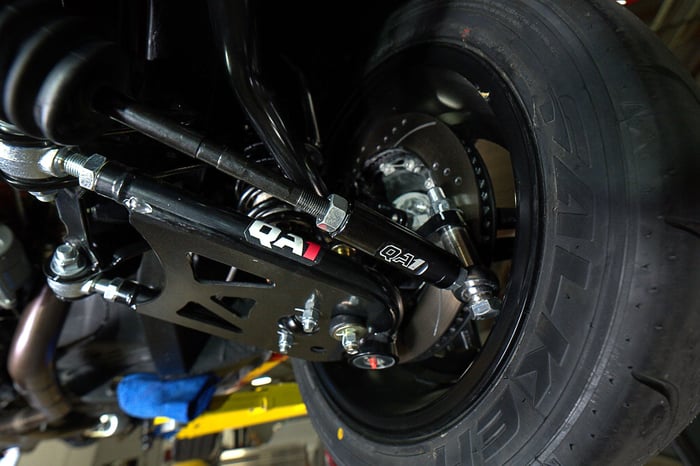
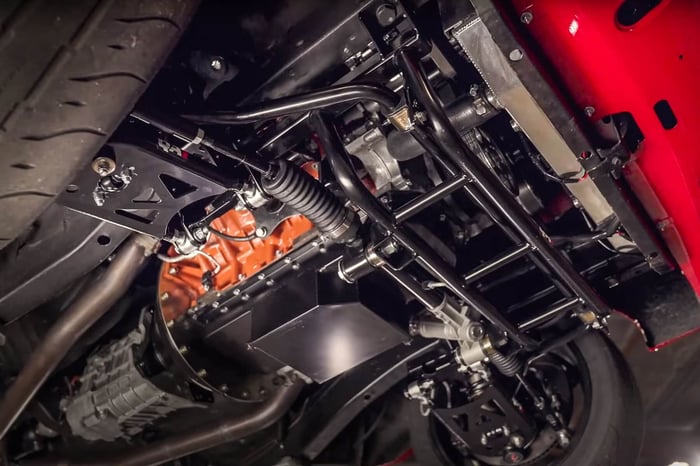
The suspension system is where this Charger moves farthest from its roots. Up front, QA1’s full tubular K-member replaces the original structure, bringing modern coilover suspension, rack-and-pinion steering, and dramatically improved geometry. The suspension is a clean-sheet design built to increase torsional rigidity, simplify engine bay layout, and completely change how the car feels on the road. Gen-3 Hemi engine mounts help streamline the modern engine swap. The QA1 double adjustable coilovers give control over ride height and damping, and the rack-and-pinion steering takes all the slop out of the front end. With the QA1 system installed, the Charger is far more responsive, turns in with confidence, and no longer feels like a 3,800-pound car with 50-year-old bones.
With convenient monthly payment options through Affirm, upgrading your classic is more attainable than ever, without compromising the performance, adjustability, and quality you get from QA1.
LEVEL 2 HANDLING KIT FOR 1968-70 MOPAR B-BODY
QA1 4-Link System Replaces Leaf Springs
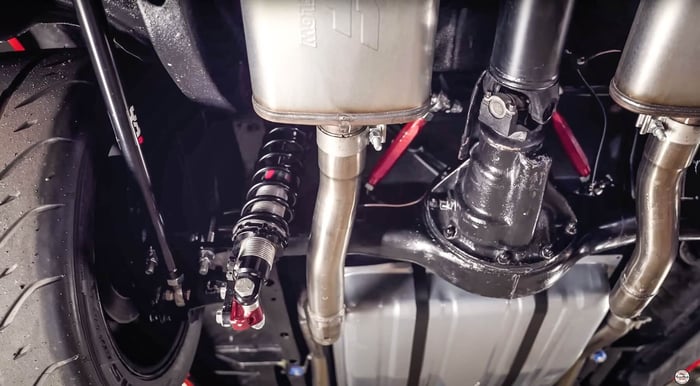
The rear suspension also features QA1 hardware, with a four-link coilover setup replacing the original leaf springs. This upgrade solves multiple problems at once—better axle control, improved traction under power, and a tunable ride. Leaf springs introduce a lot of uncontrolled movement under load, especially with this much torque, but the four-link holds everything in place. Like the front, the coilovers are adjustable, and combined with upgraded subframe connectors, torque boxes, and bracing, the entire unibody is now significantly more rigid. It’s a chassis that can actually handle the power it’s putting down and won’t twist itself into problems under stress.
A Functional Stance with Purposeful Fitment
The wheels are American Racing Grooves, measuring 18x8 up front and 18x10 in the rear. The stance is functional but not exaggerated, keeping its timeless look. It gives proper clearance for the brakes, fills the wheel arches without rubbing, and complements the Charger’s proportions. No fender rolling or stretched tires, just a clean, purposeful fitment that works.
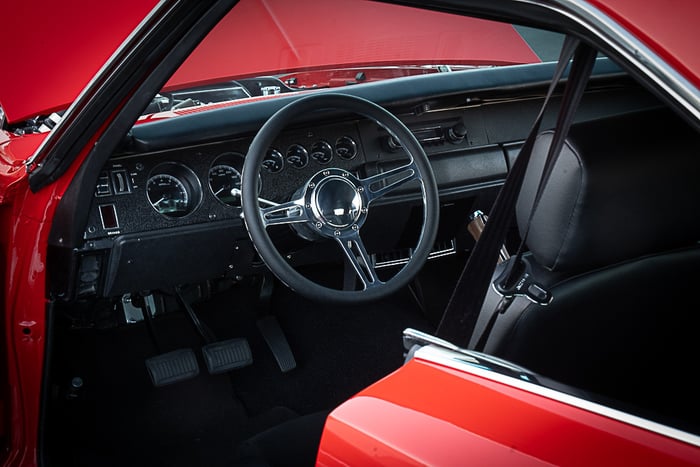
Inside, the car was updated to match its performance without erasing the original character. Dakota Digital gauges handle data display behind a tilt column and Billet Specialties split-grip leather steering wheel. The seats are Sparco GT buckets, trimmed in suede and leather and matched to a reupholstered rear seat. A Vintage Air system keeps the cabin cool, while a Bluetooth-capable stereo adds modern audio in a vintage-style head unit. The carpet, glass, and door panels are all new, and nothing was overlooked in the refresh. It feels new without losing its identity.
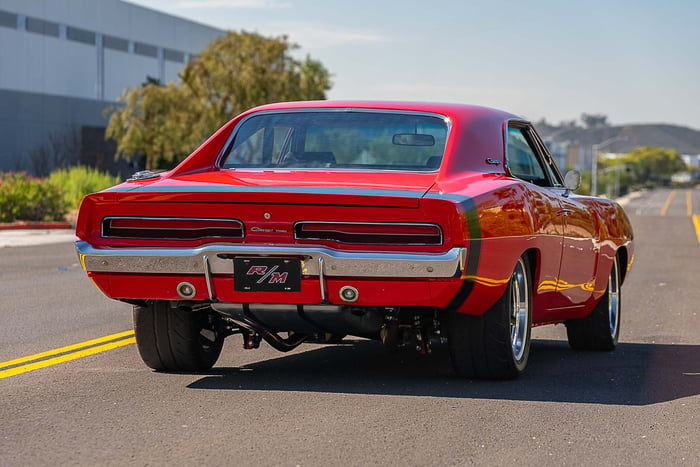
LED lighting updates are present front and rear, while Digitails LED taillights tighten up the rear. All the exterior trim, moldings, and chrome are new, avoiding the pieced-together look that plagues many restomod projects. It’s cohesive and finished throughout, down to the Ring Brothers airframe hood hinges, which add a refined mechanical detail under the hood.
Restomods wasn't aiming to copy a particular race car or match an era-correct vision, but instead pulled off a practical, well-executed Charger that balances performance, comfort, and reliability in a way that makes sense for someone who wants to drive a car like this. It doesn’t try to be a track car, and it doesn’t carry any gimmicks. The parts list reads like a greatest-hits collection of proven components, and the Charger itself backs it up in execution.
There’s nothing unfinished, untested, or experimental here. It’s sorted, usable, and ready to be driven hard. And for the person lucky enough to win it, it’s a head-turning Dodge Charger that can be used, enjoyed, and pushed without concern
FAQ's From the Article
EXPLORE ALL QA1 MOPAR SUSPENSION PRODUCTS