Wheel Alignment Basics: Camber, Caster & Toe Explained
Table of Contents
Proper wheel alignment plays a major role in how your vehicle handles, how stable it feels at speed, and how long your tires last. At the center of wheel alignment are three critical angles: camber, caster, and toe. Understanding how each one works, and how they work together, can help you dial in better performance, improved drivability, and increased safety, especially on classic muscle cars.
Classic vehicles were built around older suspension geometry and tire technology. As enthusiasts upgrade to modern suspension components, knowing how camber, caster, and toe affect alignment becomes even more important.
Let’s break down each alignment angle and explain why proper alignment matters.
Why Camber, Caster & Toe Matter for Proper Alignment
Wheel alignment determines how your tires contact the road. When alignment angles are off, tires wear unevenly, steering feels vague or unstable, and handling suffers. When alignment is set correctly, your vehicle tracks straighter, responds more predictably, and maintains better traction during acceleration, braking, and cornering.
Camber, caster, and toe are the foundation of alignment. Adjusting any one of them affects how the others behave.
What Is Toe in Wheel Alignment?
Toe refers to the direction your tires point when viewed from above.
- Toe‑in: Front of the tires point toward each other
- Toe‑out: Front of the tires point away from each other
- Zero toe: Tires are perfectly parallel
Toe In vs. Toe Out
Toe settings have a direct effect on stability and responsiveness:
- Toe‑in improves straight‑line stability, which is why most street‑driven vehicles run a small amount.
- Toe‑out sharpens turn‑in and responsiveness, commonly used on track‑focused setups.
- Too much toe, either direction, accelerates tire wear very quickly.
For most street applications, a slight amount of toe‑in provides the best balance of stability and tire life.
What Is Camber Angle?
Camber describes the inward or outward tilt of the wheel when viewed from the front of the vehicle.
- Negative camber: Top of the tire tilts inward
- Positive camber: Top of the tire tilts outward
Positive vs. Negative Camber
Modern performance and street vehicles typically benefit from a small amount of negative camber. Why?
When the car corners, the suspension compresses and the tire naturally wants to roll outward. Negative camber helps keep the tire’s contact patch flat against the pavement under load, improving grip and control.
Too much camber, however, can reduce straight‑line traction and cause uneven tire wear.
What Is Caster Angle?
Caster is the angle of the steering axis when viewed from the side of the vehicle. It’s similar to the forward or rearward tilt of a bicycle’s front fork.
How Caster Affects Steering Feel and Stability
Caster influences three key driving characteristics:
- Steering stability – More positive caster helps the vehicle track straight at speed.
- Self‑centering – Helps the steering wheel return to center after a turn.
- Steering effort – Increased caster can add steering feel and feedback.
Most modern vehicles use positive caster, especially when power steering is present. Higher caster settings improve high‑speed stability and cornering confidence, making it especially beneficial for performance‑oriented builds.

Camber vs. Caster vs. Toe: How They Work Together
Although each alignment angle serves a different purpose, they all work as a system. Adjusting camber can affect toe, increasing caster can influence camber gain, and improper toe settings can undo otherwise correct camber and caster adjustments.
That’s why alignment should always be approached as a balanced setup, not a single number adjustment.
How Adjustable Suspension Components Improve Alignment for Classic Cars
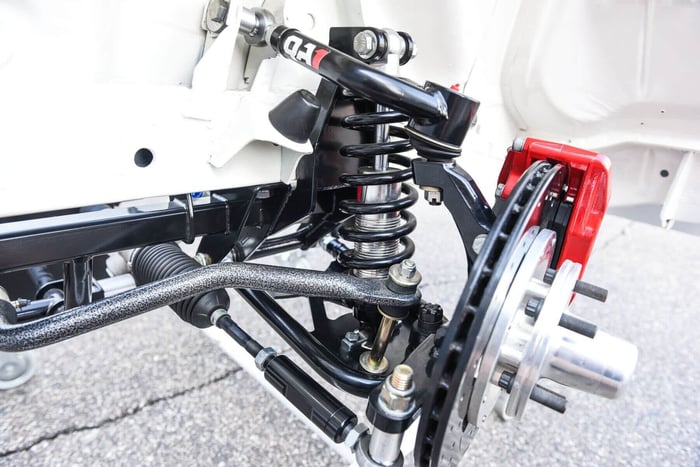
Understanding how camber, caster, and toe affect driving performance is critical when optimizing your suspension. The right components allow you to achieve proper alignment and maintain it under real-world driving conditions.
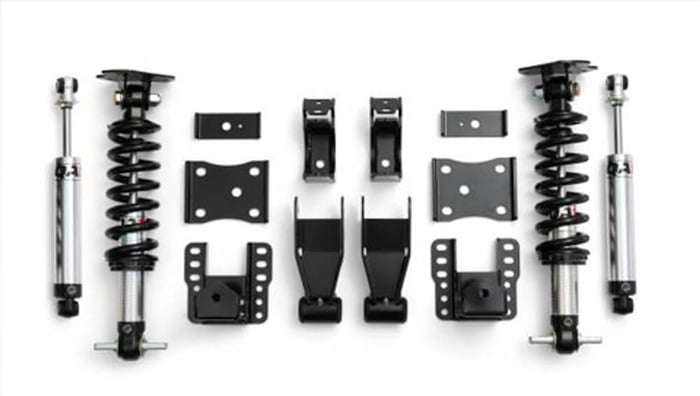
QA1 bolt-on suspension kits are designed to optimize suspension geometry to better support performance-oriented classic and muscle car applications. Pairing your suspension upgrade with Proforged steering parts takes control and responsiveness even further.
FAQs
What is the difference between camber, caster, and toe?
Camber controls tire tilt, caster affects steering stability and self‑centering, and toe determines whether tires point inward or outward. Together, they define how your vehicle handles and tracks.
Which alignment angle affects tire wear the most?
Toe typically causes the fastest tire wear if set incorrectly. Camber wear is more gradual but still important to monitor.
Do classic cars need different alignment settings?
Yes. Classic vehicles were built around older suspension and tire designs. Modern alignment specs and adjustable suspension components significantly improve handling and stability.
Can suspension upgrades improve wheel alignment?
Absolutely. Adjustable suspension components allow proper camber, caster, and toe settings that fixed factory parts often cannot achieve.