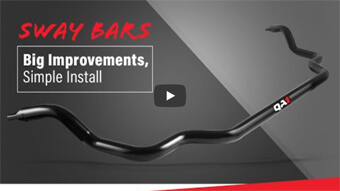
Aftermarket Sway Bars: Reduce Body Roll & Unleash Performance
Aftermarket Sway Bars: Reduce Body Roll & Unleash Performance
Discover how a high-performance sway bar can transform your vehicle's handling, enhance chassis stiffness, and provide predictable control for street, track, and drag racing applications.
The Impact of Body Roll on Vehicle Performance
Whether you’re carving your way around a high-speed corner, performing hard launches on a sticky dragstrip, or simply enjoying spirited backroad driving, body roll is a performance killer. This phenomenon occurs when the center of mass of your vehicle transfers unevenly to one side, upsetting balance, limiting grip, and making your vehicle unpredictable. A stiff, well-controlled chassis, often achieved with the right aftermarket components, inspires confidence and delivers improved performance far beyond what a factory suspension system can offer.
Why an Aftermarket Sway Bar is Essential
Off the showroom floor, most vehicle suspension systems are engineered to prioritize passenger comfort and broad market appeal, not aggressive high-performance driving, adjustability, or increased power output. These factory limitations become evident as you push your vehicle's boundaries on the road or track.
Decades ago, anti-roll bars (commonly known as sway bars) were often optional equipment, especially on trucks and utility vehicles. In contrast, sports cars and pony cars, which prioritize handling and stability, more frequently included them as standard. Today, upgrading to a performance sway bar is recognized as one of the most impactful and cost-effective modifications for serious enthusiasts.
Benefits of Upgrading to a Lightweight Tubular Sway Bar
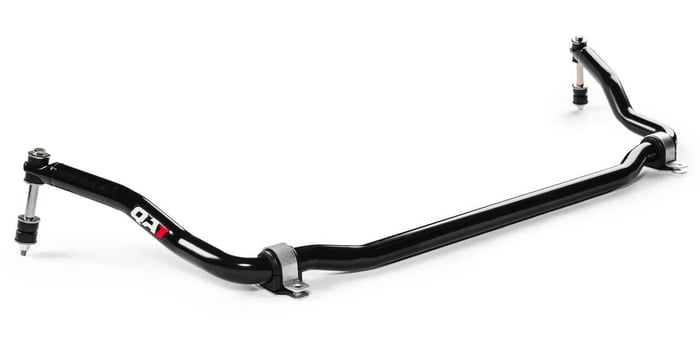
A lightweight tubular sway bar is arguably one of the best single upgrades you can make to significantly improve your vehicle’s handling characteristics, especially if your vehicle didn’t originally come equipped with one, or if you're replacing a flimsy factory unit. Often recommended as a foundational upgrade, performance sway bars are effective, relatively simple to install, and can dramatically change the balance and control of your vehicle.
A sway bar works in conjunction with your vehicle’s shocks, springs, and other suspension components. It's specifically designed to give your chassis the stiffness and stability needed to keep your tires firmly planted on the road, directly improving both performance and ride quality.
How Sway Bars Counteract Body Roll in Corners:
When cornering at high speed, the inherent compliance in your vehicle’s suspension allows the body’s weight to shift or "lean" in the direction of the turn. This centrifugal force places a greater load on the suspension and tires on the outside of the turn, causing excessive body roll. This upsets the vehicle's balance, over-loading the outside suspension while simultaneously unloading and reducing traction on the inside tires. This scenario often leads to an unpredictable return to a "set" position as you exit the turn or transition into a braking zone.
A properly tuned tubular sway bar acts as a torsional spring. As your vehicle leans into a corner, it applies the sprung weight to the shocks, springs, and ultimately the tires on that side, causing the sway bar to twist. This twisting action then applies leverage to the opposite side of the suspension. The result is a more even distribution of the vehicle’s weight transfer across all four tire contact patches. This improved load distribution leads to better overall grip and a more confident, consistent response from your vehicle.
Sway Bars for Drag Racing Applications:
In drag racing, the rotational forces of the driveline naturally want to twist the vehicle’s body to the right side during launch. This "jacking" motion again places excess force on the right side of the vehicle and crucially reduces the all-important weight transfer to the left rear tire, leading to reduced traction and wheel spin. As you increase horsepower output, this unwanted action only magnifies. A properly tuned sway bar helps to limit this body twist, keeping both rear tires more evenly planted for optimal launch and straight-line stability.
Selecting the Right Performance Sway Bar for Your Vehicle
When choosing a performance sway bar for your vehicle, it's crucial to consider both the handling benefits and the ease of installation. QA1 engineers have meticulously designed their sway bars to optimize handling, drivability, and ensure straightforward installation, often leveraging factory mounting locations to simplify the process.
Why QA1 Sway Bars Stand Out:
- Optimized Design for Vehicle Application: QA1 sway bars are specifically designed for each vehicle application, taking into account optimal material, diameter, and mounting solutions for a perfect fit and peak performance.
- Premium Material and Construction:
- Front Sway Bars: While bar diameter varies by application, many front sway bars are crafted from hollow 4130 chromoly steel with a 3/16” wall thickness. This provides a lightweight yet incredibly stiff solution.
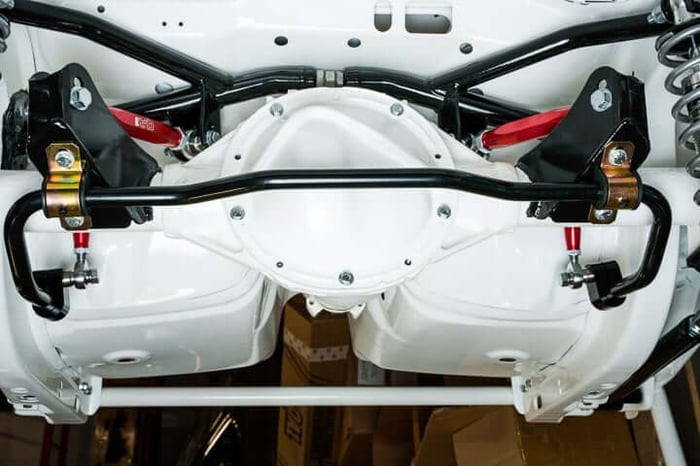
- Rear Sway Bars: Available in either hollow 4130 chromoly steel for weight savings or heavy-duty solid 1045 cold-formed steel for robust, uncompromising performance, depending on the application’s needs.
- Complete Installation Components: All QA1 sway bars come with new mounting components, including high-quality bushings and end links. This ensures that you can replace worn-out factory parts and achieve a secure, long-lasting installation right out of the box.
- Simplified Installation: QA1 sway bars strategically utilize factory mounting locations to streamline the installation process, significantly reducing or eliminating the need for additional drilling or fabrication.
Frequently Asked Questions About Sway Bars
What does a sway bar do for a car?
A sway bar (also known as an anti-roll bar) is a torsion spring that connects opposing wheels. Its primary function is to reduce body roll during cornering, keeping the vehicle flatter and distributing load more evenly across all four tires. This improves handling, grip, and predictability.
Is a thicker sway bar better?
Generally, a thicker or stiffer sway bar will reduce body roll more effectively. However, "better" depends on the application. Too stiff of a sway bar can lead to reduced independent wheel movement, potentially causing traction loss over uneven surfaces or contributing to understeer/oversteer if not properly balanced with the rest of the suspension. It's crucial to select a sway bar designed for your specific vehicle and intended use, like those from QA1.
Are sway bars easy to install?
Many aftermarket sway bars, including those from QA1, are designed for straightforward installation using factory mounting locations. While some basic mechanical knowledge and tools are required, they are often considered one of the simpler suspension upgrades, especially compared to full coilover conversions or subframe replacements.