Rod Ends Help Keep Multi-Outboard Steering Smooth
Table of Contents
How Rod Ends Help Make It Happen
If you’ve ever stood at the helm of a motorboat equipped with multiple outboards (who hasn’t, right? 😉), you know it’s equal parts thrilling and complex. Twin, triple, or even quad outboard configurations are popular for their power and speed—but they also create a unique engineering challenge: How to get all the engines to steer in perfect harmony?
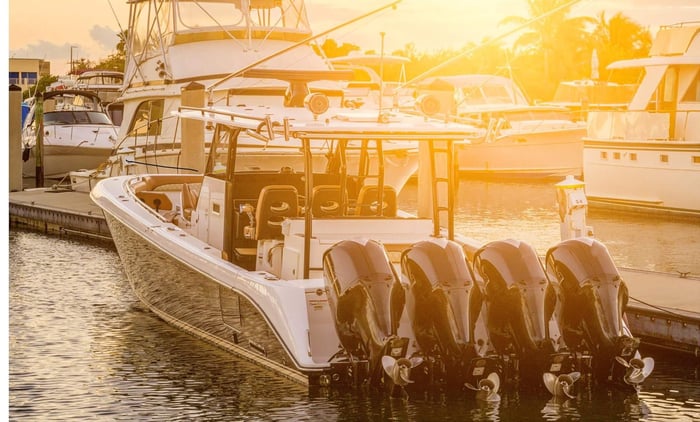
For boat manufacturers, the key is precision. Each motor has to respond consistently and simultaneously, or the captain’s steering inputs can feel sloppy, delayed, or downright unpredictable. And when you’re dealing with fast boats in open water—or worse, tight marina spaces—that’s not a risk anyone wants to take.
So how do you keep multiple outboards working together without fighting each other? Enter the unsung heroes of marine steering: rod ends and linkages.
The Problem: Aligning Multiple Outboards
Unlike a single-engine setup, multi-outboard configurations require motors to be mechanically linked together. When the captain turns the wheel, every motor needs to pivot in unison, distributing steering forces smoothly. But here’s where the headaches begin:
- Angular misalignment happens as motors tilt, trim, or flex during use.
- Vibration and torque from high-performance engines can introduce play or uneven steering response.
- Marine environments—especially salty, corrosive conditions—can wreak havoc on traditional components, leading to stiff steering, corrosion, or premature wear.
Without the right hardware, steering linkages can bind, loosen, or fail over time, turning a smooth ride into a stressful one.
The Solution: Precision Rod Ends for Marine Steering
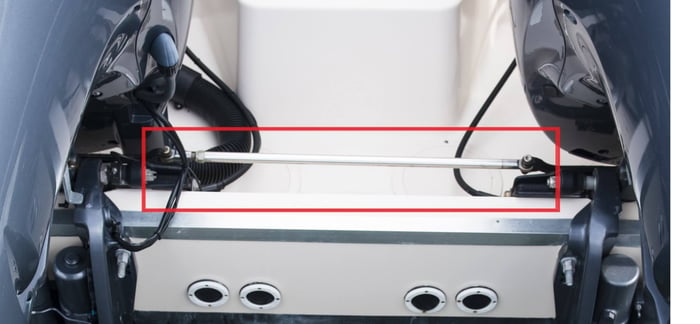
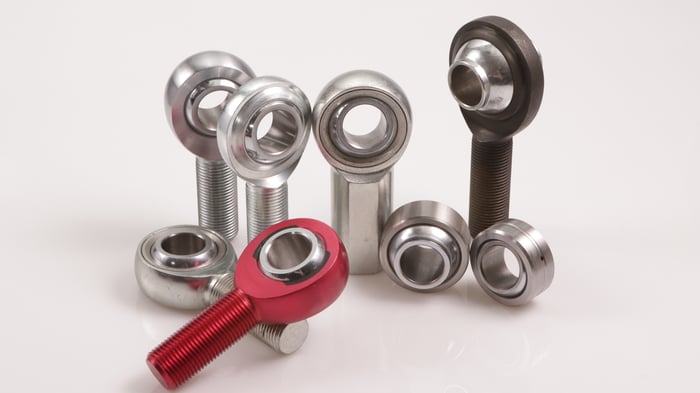
Rod ends are compact pivoting bearings that allow steering linkages to articulate while staying secure. Think of them as the flexible joint that keeps everything moving freely, even when parts are misaligned.
For multi-outboard setups, rod ends are used to connect:
- The primary outboard to the secondary engines.
- Steering cylinders to the motors.
- Custom link bars that tie the engines together.
Because rod ends allow for angular movement while still transferring loads, they’re perfect for accommodating trim changes, motor vibration, and the constant motion of a boat underway.
But not just any rod end will survive in the harsh marine environment.
Built for Spray, Sun and even Salt
Boats live in one of the toughest conditions you can imagine—water/saltwater, UV exposure, and constant motion. That’s why choosing the best rod end materials and design is crucial.
Here are some marine-friendly rod end options that hold up where others fail:
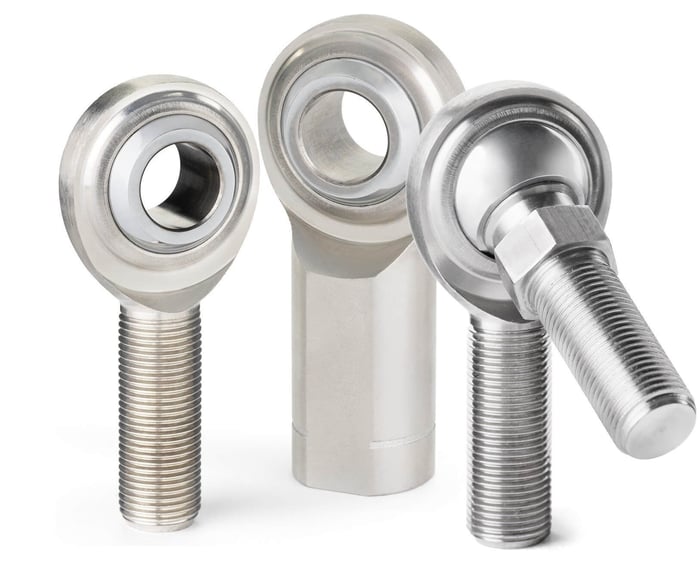
Stainless Steel – Naturally corrosion-resistant and strong, ideal for saltwater applications. G-Series
Corrosion-Resistant Plating – Protective coatings help protect carbon steel rod ends without compromising performance.
Self-Lubricating PTFE Liners – Perfect for “install-and-forget” applications. No grease required, and they resist moisture intrusion.
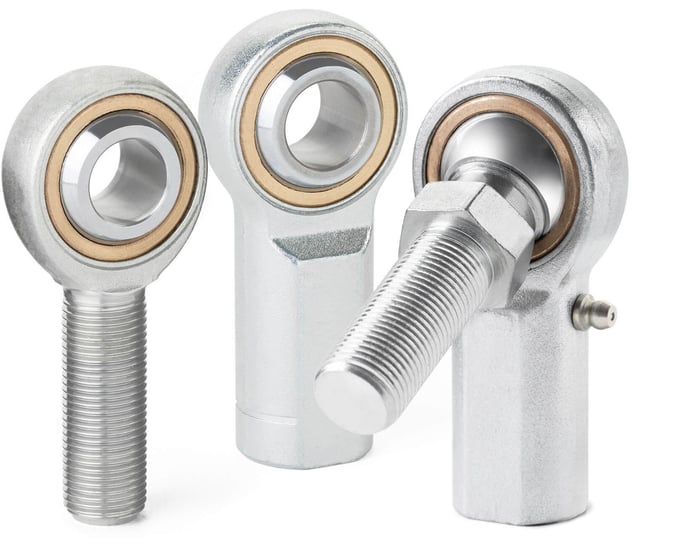
Bronze Race – Provide a low-friction surface that resists corrosion in humid/wet environments. Can also be specified with self-lubricating PTFE, or with grease fittings for serviceability. V-Series
Greaseable Designs – If you prefer traditional lubrication, some rod ends come with grease fittings so you can easily keep them running smoothly.
The right combination of material and liner ensures long-lasting, maintenance-friendly performance—even in the nastiest conditions.
Interested in Learning More?
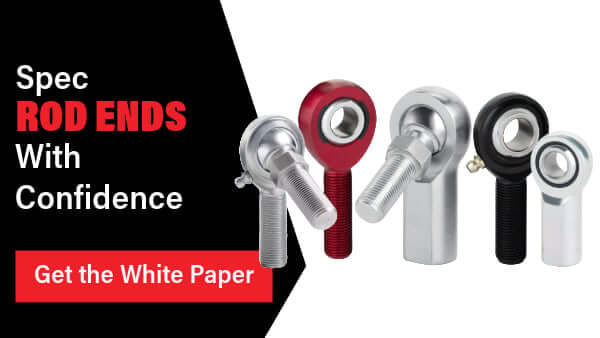
Take a deep dive into rod ends & spherical bearings with our TRAINING VIDEO designed to help industrial distributors and OEMs spec these important components with confidence!
Why It Matters for Boat/Motor Builders
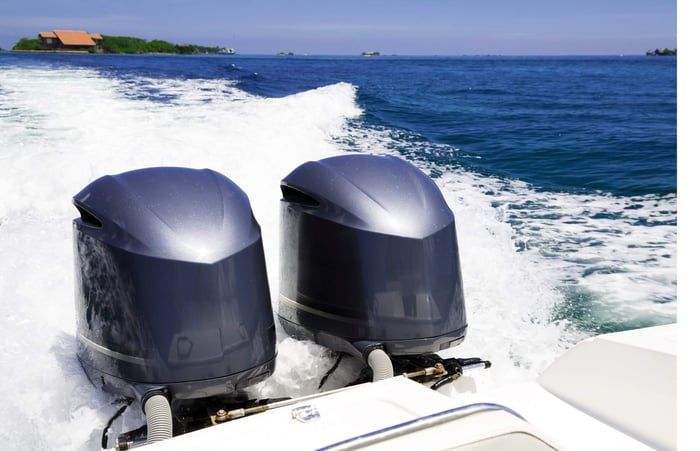
For manufacturers, the proper steering linkage components aren’t just about reliability—they’re about creating a better experience for boat owners. Smooth, precise steering builds confidence at the helm and reduces warranty headaches down the road.
Plus, well-designed linkage systems make multi-outboard rigs easier to install and service, saving time in production and maintenance.
Whether you’re designing a twin-engine fishing boat, a triple-outboard performance rig, or a luxury cruiser with four (or more) massive motors, rod ends are a small component that make a big difference in steering feel and durability.
Smooth Sailing Ahead
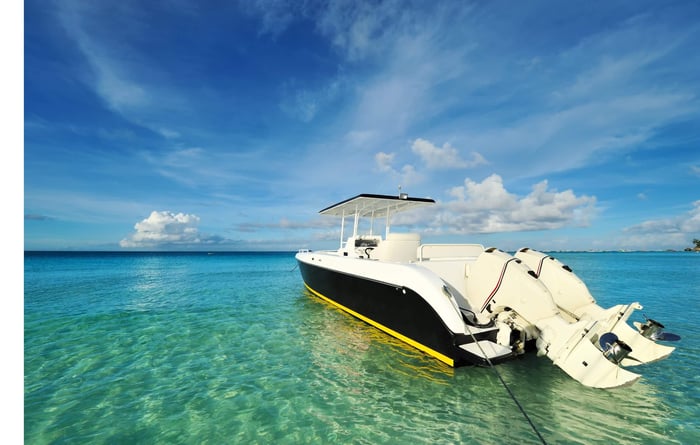
At the end of the day, rod ends and linkages are the quiet mechanical workhorses of marine steering. They don’t get the spotlight like the engines or electronics, but without them, multi-outboard setups wouldn’t be nearly as fun—or as safe.
So next time you see a sleek boat ripping across the bay with multiple outboard engines roaring in perfect sync, remember – there’s probably a network of precision-engineered rod ends behind that smooth, effortless steering.
Want to explore rod end options built for the marine environment? Contact us to find the right fit for your next project.